DISC Personality Test
Quick, accurate test to decode your behavior, motivation, and interpersonal style with clarity.
— Developed by TraitProfiler™
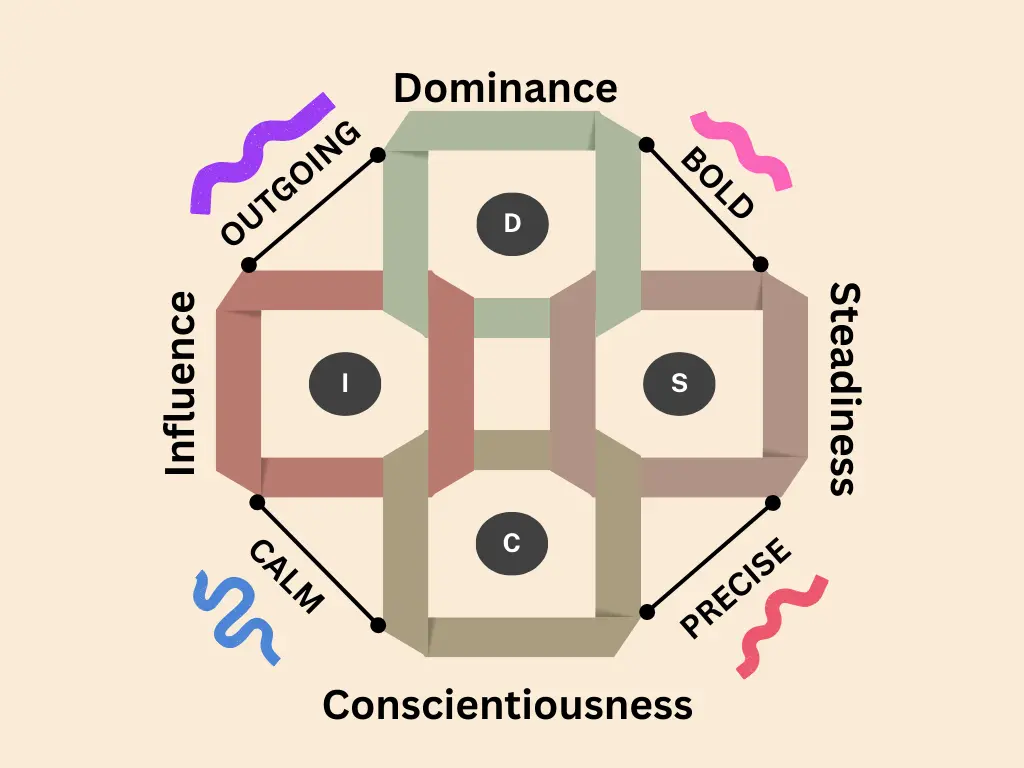
The DISC Personality Test is a scientifically grounded behavioral assessment designed to help you understand how you think, act, communicate, and make decisions. Rather than labeling intelligence or ability, DISC focuses on observable behavior patterns across four core dimensions: Dominance, Influence, Steadiness, and Conscientiousness.
You tend to be calm, patient, supportive, and consistency-oriented.
Behavioral Emphasis
Methodical, dependable, and process-oriented.
Dominance
You generally avoid forceful control and prefer collaborative or supportive roles rather than directing others.
Influence
You are selectively social, communicating comfortably when the situation calls for it without needing constant interaction.
Steadiness
You balance adaptability with stability, adjusting to change while still valuing structure.
Conscientiousness
You apply structure when useful but remain flexible when perfection is unnecessary.
Profile Overview
Your DISC profile is led by Steadiness, meaning you tend to be balanced between flexibility and stability. Your secondary style, Conscientiousness, adds a layer of being reasonably structured with flexible standards, shaping how your primary tendencies show up. Traits related to Dominance are less instinctive for you and usually require conscious effort.
Your DISC Style in Depth
You communicate comfortably when needed, without relying on constant social interaction. You balance adaptability with a preference for steady progress. You apply structure when useful, without becoming rigid or perfectionistic. Overall, your DISC style reflects how you balance action, communication, stability, and precision across different situations.
Strengths
- Communicates effectively without relying on constant social interaction
- Adapts to change while maintaining a sense of stability
- Applies structure when useful without becoming overly rigid
- Builds trust through a calm and approachable communication style
- Explains complex ideas clearly without losing accuracy
Challenges & Blind Spots
- May hesitate to assert needs or take ownership of outcomes
- May need to consciously adapt communication style across different personalities
- Self-awareness is required to balance strengths with situational demands
Communication Style
Your communication style is typically comfortable engaging without needing constant interaction, balanced between steady pacing and adaptability, clear and logical without excessive detail, approachable and attentive to others’ responses.
Stress Response
Under stress, you may hesitate to take control even when direction is needed, experience tension between internal pressure and external expectations, benefit from consciously slowing reactions under stress.
Development Suggestions
Low Dominance suggests that personal growth may involve becoming more comfortable asserting your needs and opinions. Practicing small acts of decisiveness—especially when stakes are low—can gradually build confidence in taking ownership of outcomes. With moderate Influence, growth involves becoming more deliberate about when to express ideas and emotions. Leaning into communication during key moments—rather than holding back—can strengthen connection and clarity. With moderate Steadiness, your growth lies in recognizing when stability is helpful and when it becomes limiting. Being mindful of emotional signals—both yours and others’—can help you navigate transitions more smoothly. With moderate Conscientiousness, growth comes from refining judgment around structure—knowing when to apply careful analysis and when flexibility will serve you better. Overall, your development is not about changing who you are, but about expanding your behavioral range. By strengthening less natural tendencies while preserving your core strengths, you become more adaptable, effective, and balanced across different environments.
Takes about 5 minutes • Free
The DISC Personality Test helps you understand why you do what you do.
— how you communicate, make decisions, respond to pressure, and interact with others.
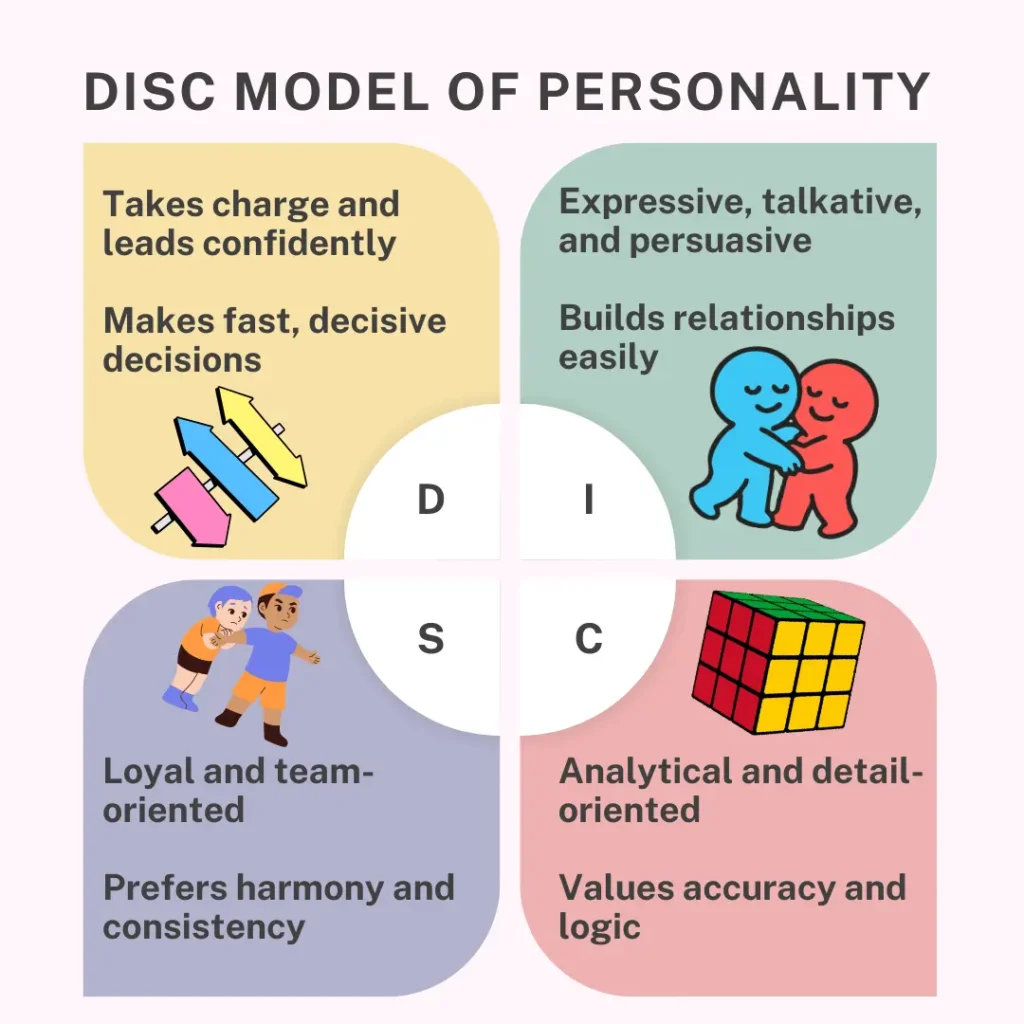
What are the 4 DISC personality types?
The DISC personality model has four main types: Dominance, Influence, Steadiness, and Conscientiousness. Dominance (D) people like to take charge, make quick decisions, and focus on results. They speak directly and want work to move fast. Influence (I) people are friendly, talkative, and enjoy meeting others; they like sharing ideas, motivating people, and working in a lively environment. Steadiness (S) people are calm, patient, and supportive; they prefer teamwork, stability, and helping others, and they do not like sudden changes. Conscientiousness (C) people are careful and detail-focused; they like rules, accuracy, and planning, and they prefer to think properly before acting. Everyone has all four types, but usually one or two are stronger and guide how a person behaves, communicates, and works.
Is TraitProfiler™ DISC assessment accurate?
It is a scientifically validated assessment designed to measure behavioral patterns accurately. The tool demonstrates good validity, meaning it measures what it is intended to measure, and good reliability, meaning it provides consistent results over time. This makes the assessment a dependable way to understand behavior, communication style, and work preferences.
What will you get from the report?
From the report, you will get a clear understanding of your DISC personality style. It explains how you naturally behave, how you communicate with others, how you make decisions, and how you respond to pressure or challenges. You will also see your main strengths, possible areas for improvement, and your preferred way of working. The report helps you understand yourself better and shows how to improve communication, teamwork, leadership, and personal growth.